![Bebop_B_Dark-1 (1).png]](https://help.bebop.ai/hs-fs/hubfs/Bebop_B_Dark-1%20(1).png?height=40&name=Bebop_B_Dark-1%20(1).png)
Each playbook combines intent data, company research, contact intelligence, and outreach guidance in one place so you can take action without extra prep work. This guide explains what an RTS Playbook includes and how to use it for email outreach, sales calls, and objection handling.
What an RTS Playbook Includes
Each RTS Playbook is created for a specific company and is structured to give you immediate clarity on who to contact, why now, and how to engage.
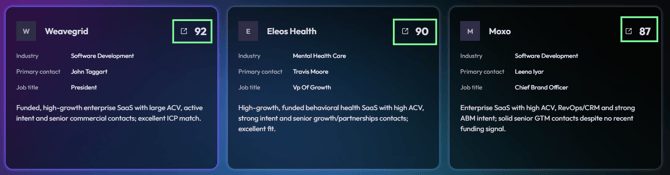
- Account Overview and Score - At the top of the playbook, you will see a Best Fit Score along with a summary explaining why this account is a strong opportunity right now. This section helps you prioritize which leads to work first and gives quick context before outreach.
-
Contact Intelligence - RTS identifies one to three key stakeholders per account and labels their role in the buying process, such as Champion, Economic Buyer, or Influencer.
- Company Context
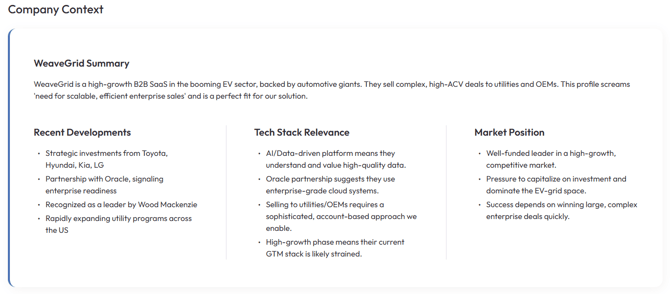
The Company Context section summarizes:-
What the company does
-
Recent developments such as funding or partnerships
-
Market position and competitive pressure
-
Relevant technology or data considerations
Use this section to personalize outreach in a way that feels informed and relevant.
-
-
Intent Analysis
Intent Analysis shows:- Competitive considerations tied to those signals
-
Clear explanations of what those signals mean
- Conversation Strategy - This is designed for call preparation. It includes:
- Discovery questions
-
Warm-up questions
- Stakeholder-specific angles
- Suggested proof points and positioning
- Risks, Challenges, and Objections - RTS highlights common objections you may encounter, along with internal and external challenges that could slow a deal. It shows, Existing data tools, Budget concerns, Internal consensus requirements and Timing objections Build-versus-buy discussions
Review this section before important calls so you are prepared to respond confidently.
Outreach Suggestions
Each playbook includes a suggested outreach email based on the company’s intent signals, business context, and stakeholder priorities.
You can copy this directly or adapt it to match your voice.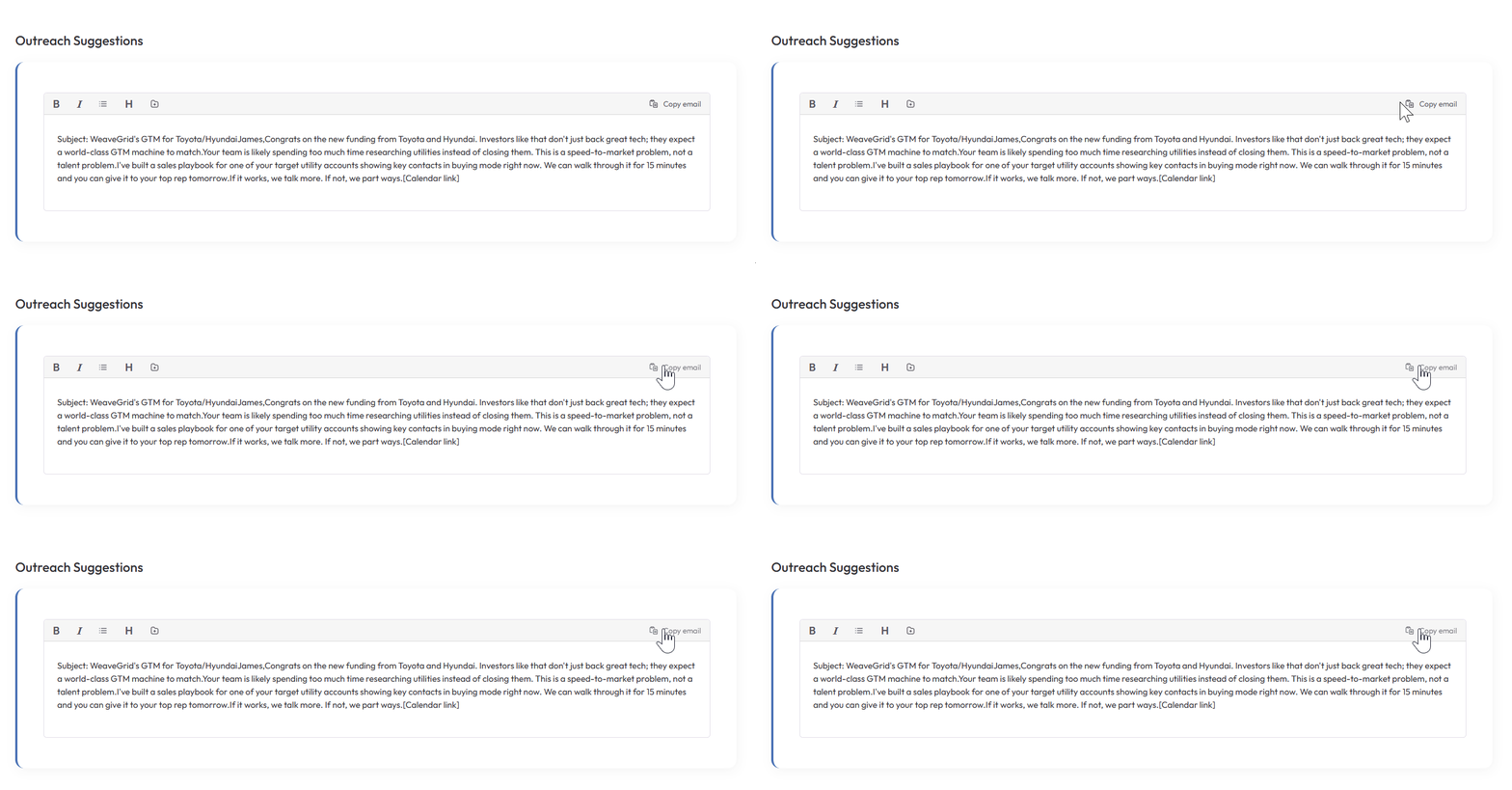
How to Use RTS Playbooks for Email and Call Prep
Email Outreach
Before sending an email:
-
Review the Intent Analysis to understand what triggered the lead
-
Reference a relevant signal or recent development
-
Use the Conversation Hints for the specific contact
-
Keep the message focused on why the timing matters
Tip: RTS emails perform best when sent within 24 hours of delivery.
Sales Call Preparation
Before a call:
-
Review the Contact Intelligence for the person you are speaking with
-
Scan the Conversation Strategy section
-
Select two or three discovery questions to guide the call
-
Note any objections or risks that may come up
Tip: Use the playbook as a guide during the conversation, not something to read word for word.
How to Tailor Messaging Using Intent Context
Intent signals are one of the most valuable parts of an RTS Playbook.
To use them effectively:
-
Reference intent naturally rather than explicitly naming topics
-
Connect intent to a clear business outcome
-
Adjust your message by role:
-
Champions respond to speed and quick wins
-
Economic buyers care about ROI and predictability
-
Influencers focus on data quality and credibility
-
Intent works best when it supports your message without feeling intrusive.
Best Practices
-
Prioritize higher-scoring leads first
-
Act quickly since intent signals are time-sensitive
-
Use the playbook as guidance, not a script
-
Review objections before calls
-
Log leads and activity in your CRM to keep momentum